By 2025, climate policy has become one of the key determinants of global economic strategy. Every government, corporation, and international institution is scaling up the pace of climate-oriented initiatives because disasters related to climate change strike with a higher frequency and seriousness, energy security is fragile, and the pressure toward net-zero targets is growing. These changes are all environmental in origin but are rebalancing investment flows, labor markets, the competitive dynamic of trade, and priorities for long-term growth.
Climate policies now form part of central global economic planning as nations move to adapt to a warming planet.
Climate policies take center stage in global decision-making.
Climate action has shifted in the last decade from long-term ambition to immediate implementation.
By 2025, industrial decisions, energy consumption, and investment patterns in major economies of the United States, European Union, China, India, and Japan are directly influenced by regulations.
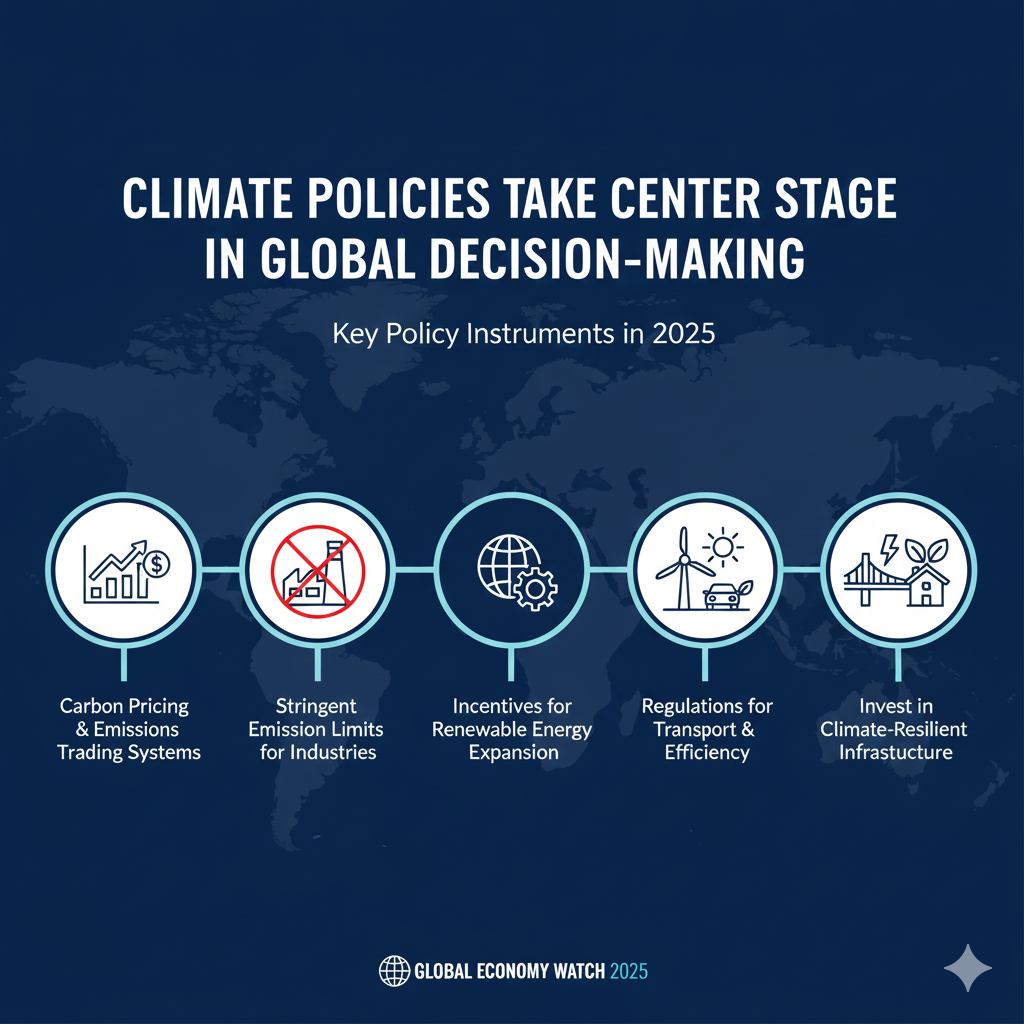
Some key policy measures to shape the global economy include:
- Carbon pricing and emissions trading systems
- Stringent emission limits for industries
- Incentives for renewable energy expansion
- Regulations targeted at transport and building efficiency
- Invest in climate-resilient infrastructure.
These policies link sustainability to the measurement of GDP growth in a redefinition of global growth.
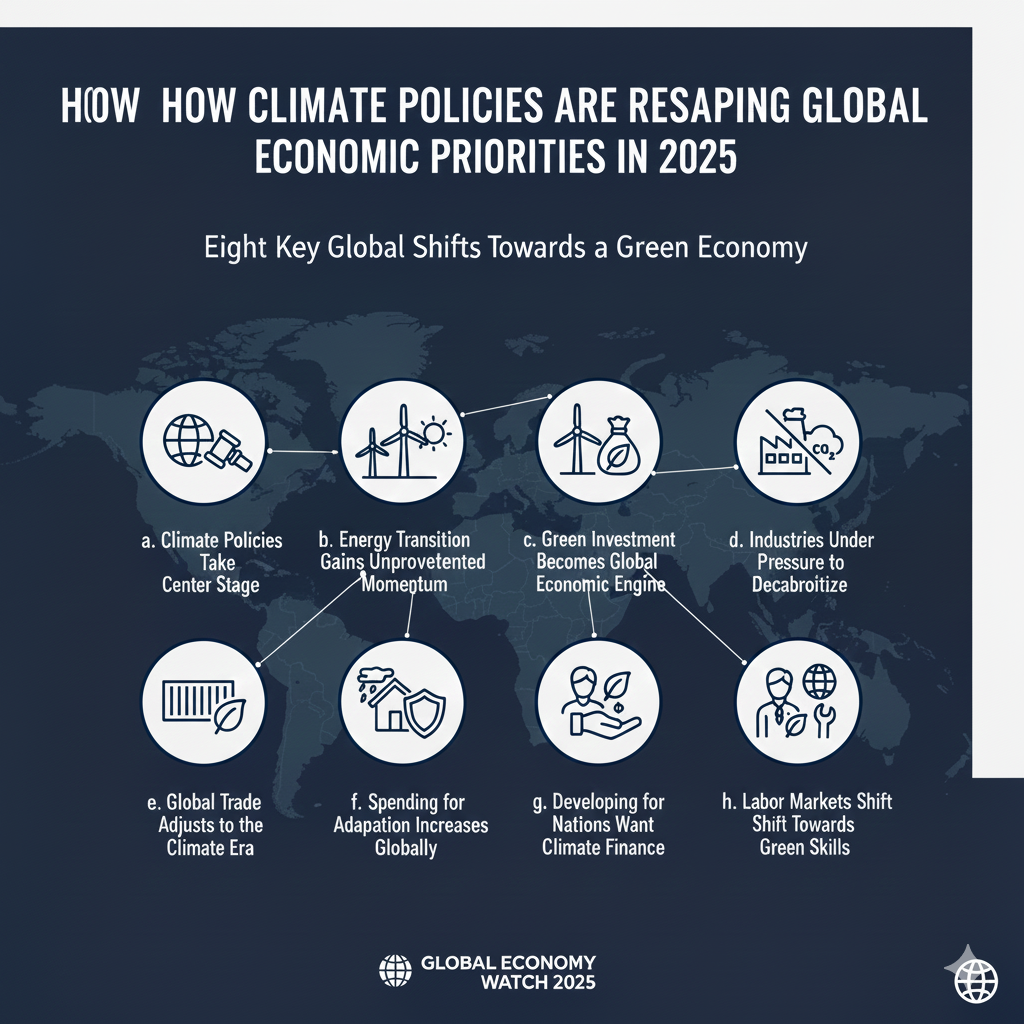
The Energy Transition Gains Unprecedented Momentum
Energy markets are changing at a pace unlike anything seen before.
Climate commitments, growing energy security concerns, and changing investor expectations are putting new momentum behind countries’ transition from fossil fuels to cleaner alternatives.
Major trends include:
- Rapid expansion of solar, wind, and hydrogen production
- Decreasing renewable energy technological costs
- Government incentives for electric vehicles
- Investments in smart grids and storage infrastructure
Fossil fuels remain important in the current mix of energies around the world, but their long-term importance is being reduced due to increased regulatory and financial pressure from climate policies.
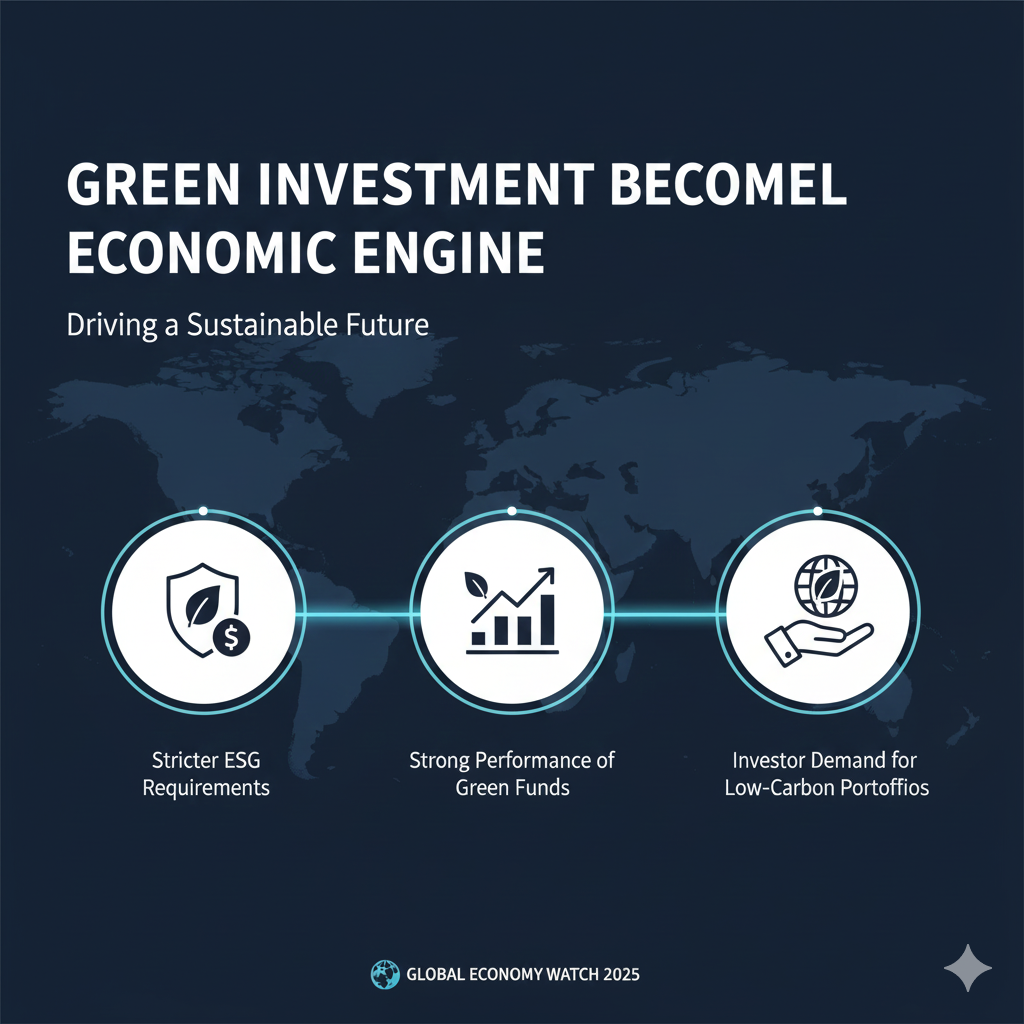
Green Investment Becomes Global Economic Engine
By 2025, green investment will play a core role in economic growth strategies.
Billions are being invested by governments into climate-focused areas like renewable energy, carbon capture, public transit, and sustainable agriculture.
Private investors increasingly shift capital into environmentally responsible assets for:
- Stricter ESG – Environmental, Social, Governance requirements
- Strong long-term performance of green funds
- Investor demand for low-carbon portfolios
This in turn translates into a global reallocation of capital in which climate-related industries become the new major employment generators.
Industries Under Pressure to Decarbonize
Climate regulation is rewriting the rules of competition in many industries.
Sectors involved with manufacturing, aviation, cement, and steel had been under immense pressure to cut down emissions and be more innovative by using cleaner processes.
Companies are responding by:
- Energy-efficient technologies should be widely deployed
- Redesigning supply chains from scratch to meet emissions standards
- Carbon capture and storage investment
- Using recycled and low-carbon materials
Companies that fail to adapt risk losing access to markets in Europe and North America where there are stringent climate requirements.
Global Trade Adjusts to the Climate Era
Climate policy is changing the way global trade flows.
New trade rules linked to the climate make imports of carbon-intensive products more expensive, including CBAMs.
This is encouraging businesses to:
- Shift production to low-emission regions
- Invest in cleaner technology to stay competitive
- Diversify suppliers to meet criteria for sustainability.
New burdens fall on countries which export fossil fuels or carbon-intensive goods, while the low-carbon economies enjoy strategic advantage.
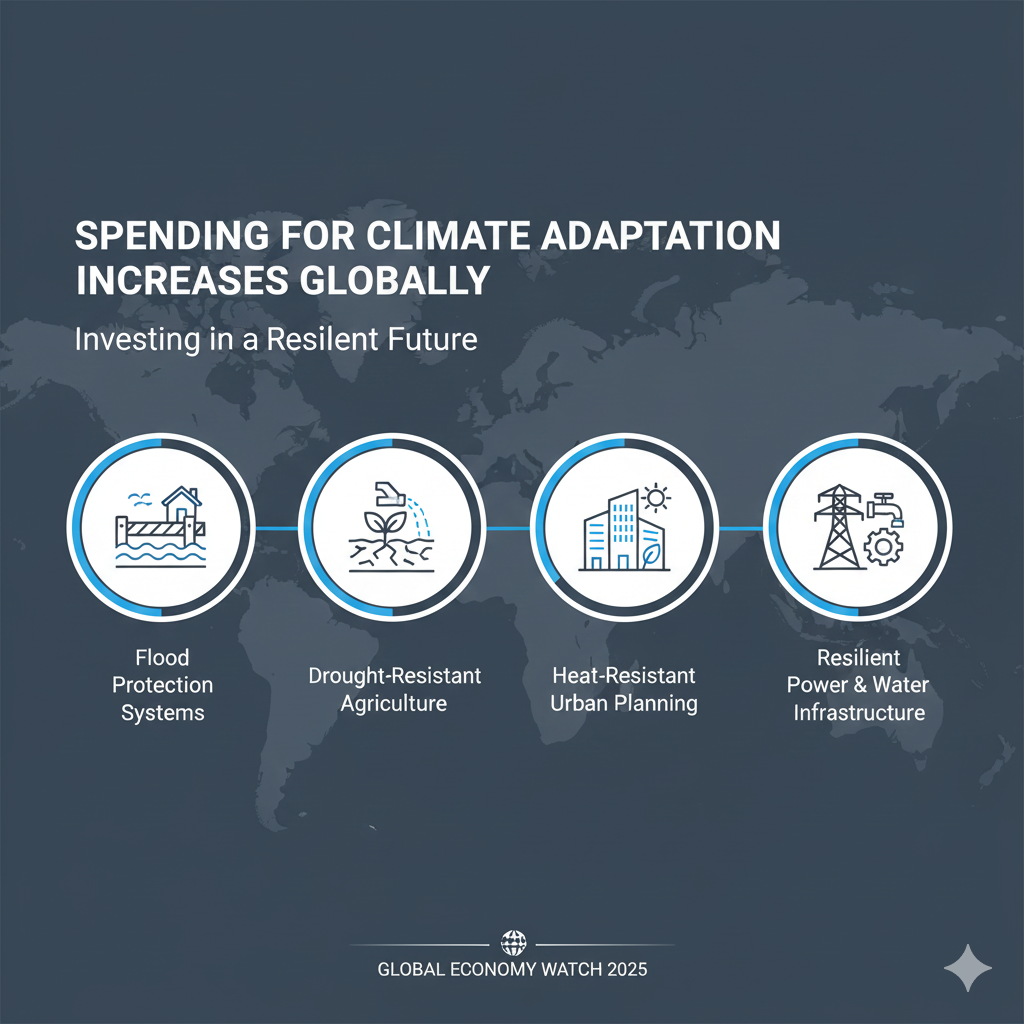
Spending for Climate Adaptation Increases Globally
Along with cutting emissions, there is now growing interest on the part of governments in promoting adaptation-readiness of infrastructure and people to increased climate impacts.
Adaptation priorities in 2025 include:
- Flood protection systems
- Drought-resistant agriculture
- Heat-resistant urban planning
- Resilient power and water infrastructure
The investments are in measures aimed at reducing long-term economic losses from extreme weather events that have continued to increase both in frequency and severity.
Developing Nations Want Climate Finance
Developing and emerging economies face twin challenges in the form of economic growth and shifting to cleaner forms of energy.
Many of them depend heavily on international climate finance for climate goals.
Meanwhile, 2025 also sees global demand for financing reach new highs, coming from developing countries in need of funding for renewable energy, sustainable agriculture, and climate resilience.
Key priorities include:
- Fair access to green technology
- Affordable financing for transition projects
- Support for adaptation programs
- Protecting against climate-related economic shocks
The distribution of climate finance becomes a central determinant of global equality and growth over the coming decade.
Labor Markets Shift towards Green Skills
The global workforce is changing significantly because of climate initiatives that create new opportunities and challenges. Growth areas include:
- Renewable energy engineering
- Environmental data analytics
- Sustainable construction
- Electric vehicle manufacturing
- Energy-efficiency consulting
While millions of new jobs are created in the green sectors, some regions heavily dependent upon fossil fuels are experiencing job losses and need transition support.
Conclusion
In 2025, climate policies will be more profoundly reshaping global economic priorities than ever before. Almost all aspects of economic life, from energy and investment flows to labor markets and international trade, are being reshaped by the transition toward sustainability. Yet while this transition obviously brings with it attendant difficulties-mostly for carbon-intensive industries and for developing countries-it also opens up enormous opportunities for innovation, resilience, and long-term growth. How well the world manages to balance climate goals with economic stability will determine the course of global prosperity over the coming decades.